Skip to content

My Counterspace · The Curiosity Lab

Welcome to The Curiosity Lab

Ever wondered why your brain remembers some things so clearly, why stress can affect your body, or how researchers work out whether something actually helps? This is somewhere to explore those questions, discover interesting research and learn how to make sense of the evidence.

At Lumuno we think of mental and emotional wellbeing as something whole. So The Curiosity Lab reaches beyond psychology and neuroscience. It also draws on how our bodies work, how we live together, and the world around us. Health is shaped by our bodies, our experiences, our relationships and our circumstances, all interacting with one another. Some of the links you will read about here are still uncertain, or need more research. This is a space for curious, careful thinking, not settled answers.

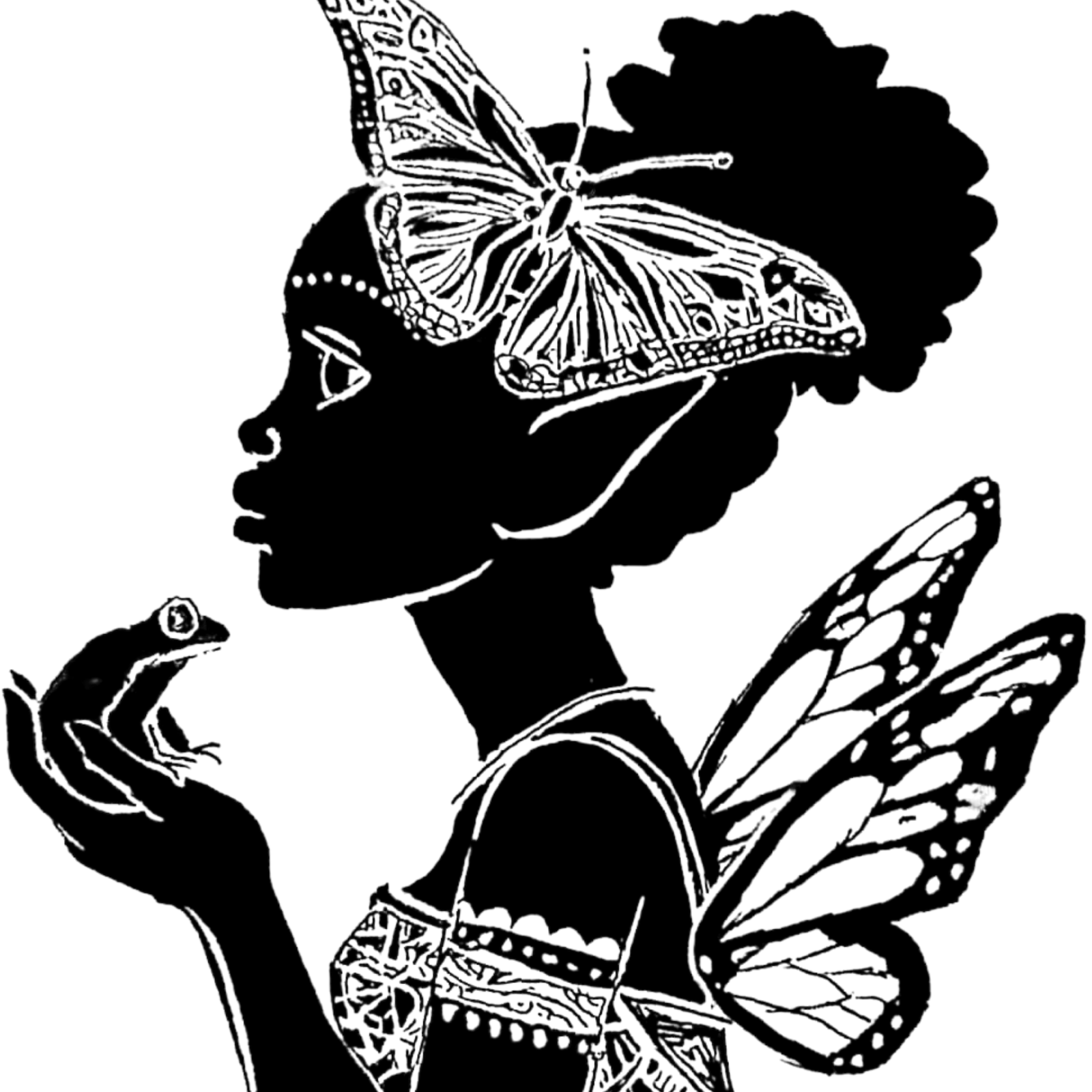
The Curiosity Lab, an illustrated educational space within My Counterspace.

a corner for curious minds

00

Find your way around

Four ways to explore

The ideas in The Curiosity Lab come from many fields, because health and everyday life do not arrive in neat boxes. These four categories are a way to find your bearings. They overlap, and many questions here belong to more than one. Use them as a gentle map, not a boundary.

1

Your Mind and Behaviour

How we think, feel, learn and act. This area gathers ideas from psychology and neuroscience about attention, memory, emotion, habits and the ways our minds quietly shape everyday experience.

Covers  Psychology, neuroscience, thoughts, feelings, learning and behaviour.

Find it here  Curiosity cards on neuroplasticity, habits and attention; “Something worth knowing” questions on memory and perception.

2

Your Body and Health

How the body works and responds. This area draws on physiology, medicine, immunology, microbiology, nutrition and genetics to explore how bodies function, adapt and interact with their surroundings.

Covers  Physiology, medicine, immunology, microbiology, nutrition and genetics.

Find it here  “Something worth knowing” questions on stress, the immune system, genes, sleep and nutrition.

3

Your World and Circumstances

How relationships, society and surroundings shape us. This area brings in sociology, public health, economics and environmental research to look at the wider conditions that influence health and everyday life.

Covers  Relationships, society, public health, economics and environmental influences.

Find it here  “Something worth knowing” questions on relationships, place, income and surroundings.

4

Understanding Research

How we make sense of evidence. This area is about reading research carefully: asking what question was studied, how, what the results really showed, and where uncertainty remains. It is a skill anyone can practise.

Covers  Assessing questions, methods, findings, limitations and uncertainty.

Find it here  The “How do we know?” questions and the “Observation, idea or evidence?” activity.

01

Section one

Something worth knowing

A few open questions from across the sciences of health and everyday life. None has a tidy single answer, and that is the point. Each one is an invitation to follow the evidence, rather than settle for a confident-sounding summary.

01Neuroscience

Why does the brain remember some things so clearly?

Memory is not a recording. It is rebuilt each time we recall it, which makes some moments vivid and others surprisingly fragile.

02Physiology

How does stress reach the body?

A perceived threat can set off a cascade of physical changes, from heart rate to hormones, before we have consciously decided anything is wrong.

03Immunology

Can the immune system learn and remember?

The immune system keeps a record of threats it has met before, which is the principle behind vaccination. It is one way the body adapts across a lifetime.

04Nutrition

Is there a link between what we eat and how we feel?

Research on diet and mood is growing but still uncertain. Some connections look promising, yet it is hard to separate food from the many other things that shape how we feel.

05Genetics

Do our genes fix our health in advance?

Genes can influence our risk of certain conditions, but they rarely determine outcomes on their own. They interact with environment, circumstances and behaviour throughout life.

06Sociology

How do relationships shape health?

Social connection, isolation and the quality of our relationships appear to influence both mental and physical health, though the reasons are complex and intertwined.

07Public health

Why does health vary between places and groups?

Health is not shared evenly. Differences in income, housing, work and access to services all contribute to the gap between groups and areas.

08Economics

Does money affect health?

Material circumstances shape the conditions in which people live, work and cope with stress. The relationship between income and health runs in both directions and is not simple.

09Environmental research

How do our surroundings influence wellbeing?

Green space, air quality, noise and the design of where we live can all affect wellbeing. Research in this area is active and still developing.

10Psychology

Why do two people see the same event differently?

Attention, expectation and prior belief all shape what reaches awareness, not just the event itself.

11Behavioural science

Can we really change habits through willpower alone?

Behavioural science suggests that cues, context and repetition do more of the quiet work than effortful control.

12Research methods

What makes a piece of research trustworthy?

Sample size, method and replication all matter. A single striking study is rarely the whole picture.

02

Section two

Let’s investigate

Draw a card and read it slowly. Each explains a single idea from the science of everyday life in plain language, with a short reason it might matter to you. These are starting points for curiosity, not medical advice.

Curiosity card deck

Ideas from the science of everyday life, in plain language.

Press the button to draw a card. Each one explains a single idea in everyday words. You can keep drawing until something catches your interest.

03

Section three

How do we know?

Before trusting or sharing scientific information, it helps to ask a few honest questions of it. You do not need specialist training. The five questions below are a practical starting point, whether you find a claim in a news article, a social media post or a published study.

One experience is not a conclusion

A single person's experience can be meaningful and worth investigating, but on its own it cannot show how common something is, what caused it, or whether it would hold for others.

Association is not causation

When two things occur together, one does not necessarily cause the other; they may share a common cause or be coincidental. Section six explores this in more detail.

04

Section four

Observation, idea or evidence?

Scientific thinking is something we all use. This short activity invites you to read one statement at a time and decide whether it is a personal observation, a scientific hypothesis or research evidence. There are no scores; read the explanation after each choice.

A short thinking activity

Question 1 of 3

Read this statement

“I've noticed that concentrating sometimes feels harder after a night of poor sleep.”

Which is it?

05

Section five

What does that actually mean?

Research language can feel like a foreign dialect, but the words are not as mysterious as they sound. Choose a term below for a short, plain explanation; enough to read a summary or news article with a little more confidence.

A friendly scientific glossary

Select a word to see what it means in everyday language.

Research

Research is the careful, organised process of asking a question and then trying to answer it through observation, measurement or experiment. It is not simply collecting opinions; good research is planned, recorded and open to being checked by others. The word covers a huge range, from large clinical trials to small surveys and interviews.

In everyday terms  If a team wanted to know whether a particular app helped people sleep, they might design a study, recruit volunteers, measure their sleep before and after, and report what they found. That whole effort is the research.

06

Section six

When two things happen together, does one cause the other?

Noticing that two things often appear together is a useful first observation. In research, that pattern is called an association. But an association on its own does not establish that one thing causes the other. This short activity uses a clearly labelled hypothetical example to show why.

A short thinking activity

Hypothetical example · not real data

Imagine this scenario

“Suppose a person notices that on days when they feel more stressed, they also tend to sleep worse.”

This is an invented example. No study, survey or statistic lies behind it. It simply describes a pattern many people recognise: stress and poor sleep often seem to go together. That pattern is an association. The question is what, if anything, it tells us about cause and effect.

What might explain it?

Choose an explanation to explore it. None of these is presented as proven.

Select an explanation above to read more about it.

This activity is for learning. It does not describe real research, and it is not health advice.

07

Section seven

Kinds of evidence

Lumuno translates research independently. Rather than relying on one organisation's explanation of mental health, we read across the evidence and explain it in plain language. The five kinds of source below appear throughout the health literature, and each answers a different question. Knowing which one you are reading helps you judge what it can and cannot tell you.

What each source can and cannot establish

Five broad types, from single studies to personal accounts.

  • 1

    Original research papers

    A single study in which researchers ask a specific question, collect data and report what they found, setting out their methods so others can judge and repeat the work.

    Can establishA finding under the particular conditions studied, such as whether a measured effect appeared in a defined group of people.

    Cannot establishA settled general truth on its own. One study has limits of sample, design and context, and its result may not hold for other groups, settings or times.

  • 2

    Systematic reviews

    A structured effort to find, assess and pool the relevant studies on a question, so the whole body of evidence can be read together rather than one paper at a time.

    Can establishWhat the collective evidence suggests and where it remains mixed or sparse, which is usually more reliable than any single study.

    Cannot establishConclusions beyond the studies that exist. A review cannot settle a question no study has yet examined, and its strength depends on the quality of what it includes.

  • 3

    Clinical guidelines

    Recommendations for practice, developed by expert panels from the available evidence and their collective judgement.

    Can establishA recommended course of action for a given situation, reflecting current consensus and the evidence the panel weighed.

    Cannot establishThe underlying evidence itself, or the right choice for every individual. Guidelines interpret research rather than replace it, and they are revised as the evidence changes.

  • 4

    Institutional health information

    Accessible summaries and service information from bodies such as the NHS, government health agencies and recognised charities.

    Can establishExplanations in plain language of conditions, treatments and where to find help, written for the public.

    Cannot establishThe primary research behind them. These are interpretations and summaries, not the studies themselves, and they may simplify or lag behind newer findings. NHS material is supplementary UK healthcare guidance and service information, not a substitute for reading the underlying research.

  • 5

    Personal experience

    An individual account of living with a condition, circumstance or treatment, including lived experience shared by others.

    Can establishWhat an experience is genuinely like for one person, which can illuminate, guide useful questions and build understanding.

    Cannot establishHow common something is, what caused it, or whether it would hold for others. A single account cannot demonstrate a general conclusion or prove causation.

How Lumuno weighs a source

When a claim matters, we look at how the research was carried out and how many people it involved, whether it is relevant to the question, what its authors state as limitations, and when it was published. Newer work can refine or overturn older findings. Where the evidence is thin or mixed, we say so.

A consistent way of referencing

Where The Curiosity Lab points to a source, it is described in the same way each time: the name of the organisation or study, the kind of source it is, what it offers, and a link you can check for yourself. We do not invent citations, results or dates. If a point cannot be traced to a verifiable source, we qualify it or leave it out rather than dress it in a reference it does not have.

08

Section eight

Explore further

When an idea here sparks your interest, read further from a source you can check yourself. The sources below span the kinds of evidence described above, each labelled by type. They are independent of Lumuno, and listing them is not an endorsement of every claim they carry.

How to read this room

Treat each card as a doorway, not a verdict. A single striking result is interesting; a body of evidence pointing the same way is more convincing, and where the evidence is mixed it is honest to say so.

If something here matters to your own health or circumstances, follow it up through a trusted source, a library or a qualified professional. The Curiosity Lab is a friendly starting point, not a substitute for clinical advice, diagnosis or treatment.

Curiosity is welcome here. Certainty is not required.

An original note for My Counterspace.

Ready to wander somewhere else?

Return to The Front Room whenever you like. You can always come back to The Curiosity Lab and draw another card.

Back to The Front Room